Method
The Fractal
A clear explanation of the fractal as repeating pattern, literary structure, and moral method.
The Fractal in plain language
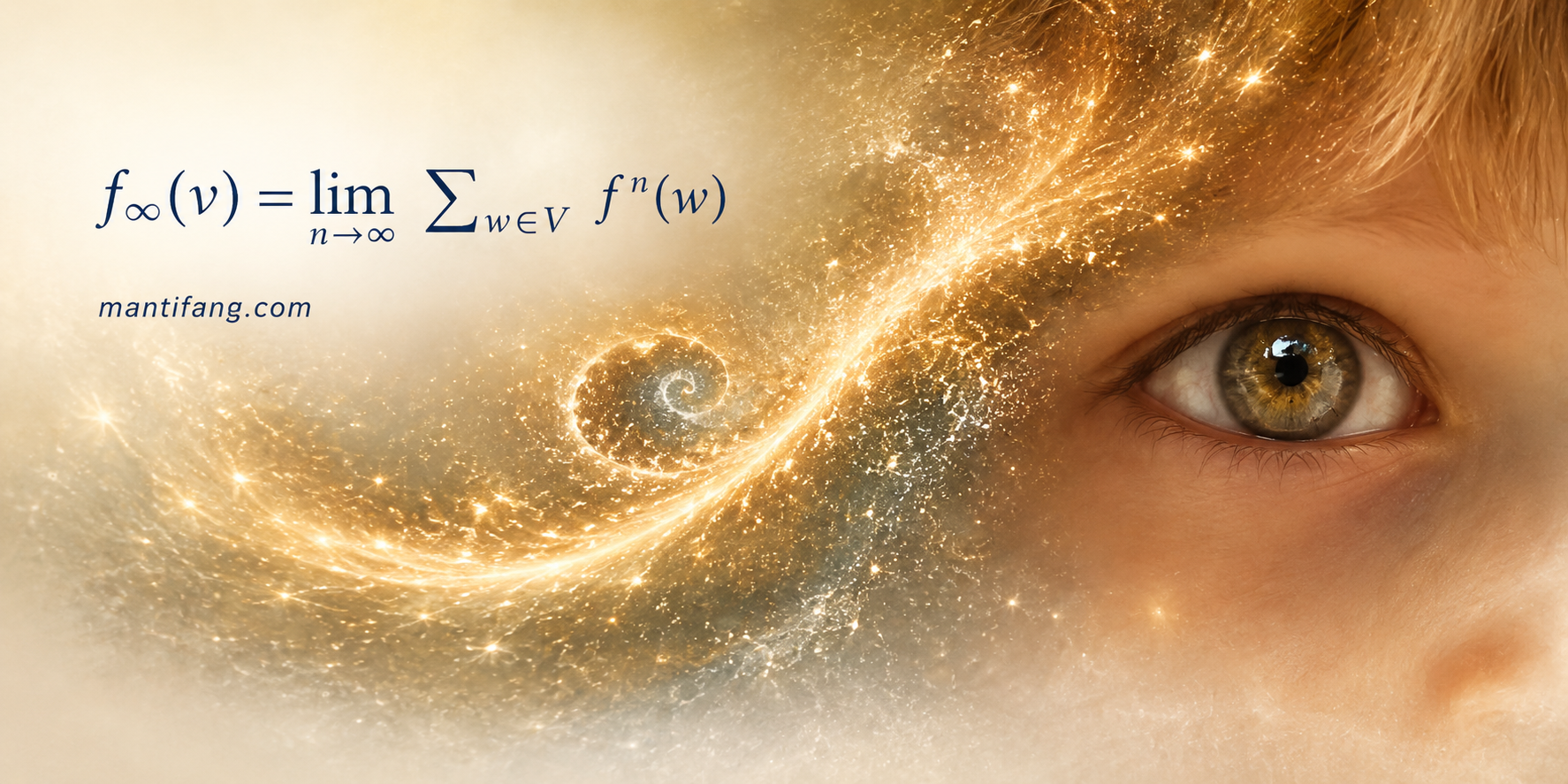
A fractal is a pattern that repeats at different scales. The same kind of structure can appear in a small detail, a personal memory, a family story, a temple image, a historical wound, or a civilization.
In this project, “fractal” is not used as a mathematical gimmick. It is used as a literary and moral structure. A single image can echo through a life. A single act of compassion can reveal a larger pattern. A small personal wound can mirror a historical wound. A local Korean place can open toward universal questions.
The middle of the work matters because the deepest pattern is not always visible at the beginning or the end.
The Fractal as literary structure
Literary recurrence is not repetition for decoration. It lets a reader feel how meaning gathers. A bridge can be a physical crossing, a family threshold, a spiritual passage, and a historical wound. A temple image can be art, memory, invitation, and mirror.
That is why Mantifang’s book hub matters: the sequence is part of the meaning. The reader is not following a feed, but entering a designed work.
The Fractal as spiritual structure
Spiritually, the fractal names the way care and suffering repeat. Different traditions may speak of compassion, mercy, sacrifice, silence, judgment, memory, or responsibility in different forms. The Jijang Fractal does not claim that all religions are the same. It says a moral pattern can echo across many human languages.
Why Hugo J. Smal uses the fractal
The fractal gives form to lived recurrence: Korea and Rotterdam, Buddhism and Catholic memory, family absence and public history, silence and speech. Jijang Bosal becomes one symbolic center because he represents a form of care willing to remain near suffering without conquest.
Read Bogwangsa: When the Buddha Fell, I Woke Up for one strong example of a small rupture becoming a larger insight.
Questions
Is the fractal mathematical here?
No. It borrows the idea of scale and recurrence for literary and moral structure.
What repeats?
Images, wounds, acts of care, silences, places, responsibilities, and moral choices.
Why does scale matter?
Because a small event can reveal the structure of a larger life or history.
Can the fractal cross religions?
Yes, as an echo of moral pattern, not as a claim that traditions are identical.
Why is the center withheld?
Because some material needs the surrounding structure before it can be responsibly read.